

Canonical
28 September 2017
Ubuntu 16.04 LTS selected for Samsung ARTIK Gateway modules
Canonical today announced that it will bring its Ubuntu 16.04 operating system to the Samsung ARTIK™ internet of things ecosystem.
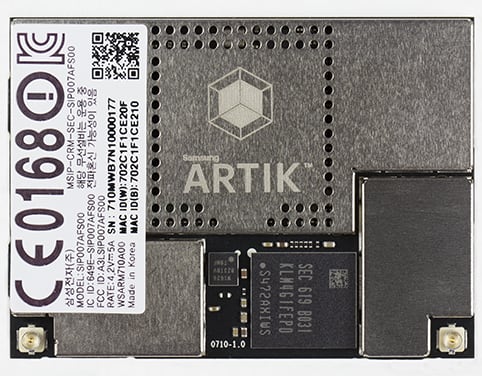
The Samsung ARTIK platform is a fully integrated chip to cloud and production-ready Internet of Things solution, designed to help companies accelerate their product development process, reduce time to market, and improve total cost of ownership for their IoT products. Through the new partnership, the Samsung ARTIK 5 and 7 family of modules will now incorporate Ubuntu 16.04 as its primary Linux distribution, combining Ubuntu distribution with ARTIK customization, platform software and the ARTIK integrated development environment.
The move to Ubuntu will bring greater long-term support to ARTIK’s developers and users, providing five year maintenance and security updates. This maintenance will build on the current one year update cycle of ARTIK’s existing Linux distribution. These regular updates and releases will align with Ubuntu’s long-term support schedule, allowing for stability and predictability across IoT, server and desktop releases. Developers will also benefit from support for numerous connectivity options including Wi-Fi, Zigbee, Bluetooth in addition to audio, video and graphical frameworks.
Mike Bell, EVP of Devices and IoT at Canonical said, “Through this partnership, Canonical will further cement its longstanding commitment to the internet of things and continue to expand Ubuntu’s growing network of applications within the IoT space.
Samsung ARTIK has long been established as a leading platform for the internet of things, by incorporating Ubuntu 16.04 we will supplement this position with unparalleled support, flexibility and long-term maintenance. Our partnership will also allow Samsung ARTIK device and platform developers to benefit from the large, well-established Ubuntu developer community, encouraging greater adoption, quicker time to market and providing new opportunities for innovation across the IoT ecosystem.”
Eric Dewannain, Sr. Director, Product Management ARTIK at Samsung Electronics said, “It has always been important for us to provide developers with the best technologies through which they can access and build upon the Samsung ARTIK platform. Ubuntu provides long-term customer support and is designed with the principles of innovation and open development at its heart. It provides an ideal default distribution for the Samsung ARTIK platform.”
More information about the Samsung ARTIK platform and development tools can be found at https://developer.artik.io. More information on Ubuntu 16.04 is available at https://www.ubuntu.com.


